Stockton HVAC Changeout Permits and the Duct Test (ECC, Formerly HERS)
What Stockton’s May 2026 checklist requires when you replace an air conditioner, furnace, heat pump or ducts, and what the duct test means for you.
Ask for a replacement estimate
Say which system you’re replacing and we’ll pass your request to one independent local HVAC contractor for a free in-home estimate.
Or call (209) 420-1354
Stockton permits
Do I need a permit to replace HVAC equipment in Stockton?
Yes. Stockton requires a building permit for an HVAC changeout and for replacing a furnace, coil, FAU or condenser.
The city’s Residential HVAC Requirements checklist (BLDG-0048), revised May 12, 2026, lists five triggers:
- A new HVAC installation
- An HVAC changeout
- Replacing a furnace, coil, FAU (forced-air unit) or condenser
- Relocating an existing HVAC unit
- Adding or replacing more than 25 feet of ducting
Small repairs are different. Stockton’s list of residential work exempt from permit includes replacing a minor part that doesn’t alter the equipment’s approval or make it unsafe, along with portable heaters, portable coolers and evaporative coolers. A new capacitor doesn’t need a permit. A new condenser does.
Last updated November 2026.
Who can pull the permit?
A licensed C-20 contractor with a Stockton business license can pull it, or the owner can, using the city’s Owner/Builder form.
The city checklist says permits go to a California-licensed C-20 contractor holding a current City of Stockton Business License, or to the property owner with a completed Owner/Builder form. If someone other than the contractor picks up the permit, the city wants an authorization letter from the licensed contractor.
Owner-builder permits put the responsibility for the work, the inspection and the energy paperwork on you. Most homeowners let the installing contractor pull the permit, and that should be stated in the estimate. The Contractors State License Board says anyone doing home improvement work worth $1,000 or more must be licensed, so check the license with the CSLB license check before you sign.
How do you apply?
Most contractors apply online through Stockton’s Accela portal; you can also apply at the Permit Center counter.
According to the checklist, permits can be applied for, paid for and received through the Accela Citizen Access portal, which needs a free account. In person, the Permit Center is at 501 W. Weber Ave., Building 2, open Monday through Friday from 8:00 a.m. to 4:30 p.m. and closed alternate Fridays, per the Permit Center page. The phone number is (209) 937-8561.
The submittal checklist includes:
- A building permit application
- Energy compliance forms
- Gas pipe sizing calculations, if they apply
- The Owner/Builder form, if the owner is pulling the permit
- An authorization letter for anyone picking up the permit for the contractor
- Plans, when a new unit is installed on a roof or in an attic
What are the energy forms?
They’re state Energy Code compliance forms: a CF1R before the permit, and CF2R and CF3R forms by the final inspection.
Stockton’s checklist names three:
| Form | When | Who signs |
|---|---|---|
| CF1R-ALT-02-E | At permit application; must already be registered with an ECC provider | Prepared for the permit applicant |
| CF2R-MCH | Available at final inspection; registered | Installing contractor |
| CF3R-MCH | Available at final inspection; registered | Independent verification rater |
The checklist also lists a setback thermostat for altered or new cooling systems and at least R-8 insulation for new or replaced ducts in unconditioned space, such as an attic.
What is the duct test, and why is it now called ECC?
It’s a pressure test of your duct system by an independent rater; California renamed the HERS program “Energy Code Compliance” (ECC) in the 2025 code.
The California Energy Commission’s 2025 Energy Code overview says the code took effect January 1, 2026 for permit applications from that date. It moved the Home Energy Rating System program into Title 24, Part 1 and renamed it the Energy Code Compliance program, with a focus on consumer protection and conflict-of-interest rules. Your estimate may say HERS or ECC. They mean the same third-party check.
Stockton’s checklist requires duct sealing and testing (ECC verification) for altered and new or replacement duct systems.
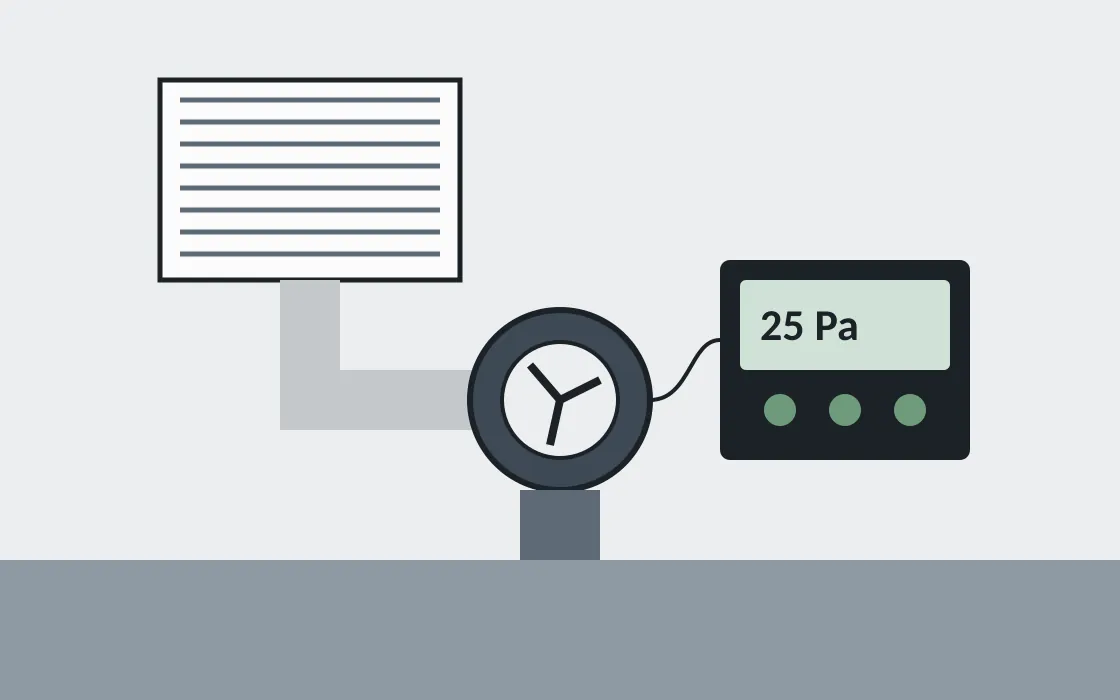
How the test works
The registers are taped off and a calibrated fan pressurizes the ducts. A gauge then reads how much air escapes through leaks. If leakage is above the allowed limit, the contractor seals the ducts and the rater tests again. The results are entered on the CF3R form and registered.
Why should a homeowner care about the test?
Because leaky or disconnected ducts can make a brand-new system perform badly, and the test is the easiest way to catch them.
In Stockton HVAC reviews we studied, one homeowner said a new system never moved air properly because ducts about 70 years old were left in place. Another said a disconnected duct in the attic took several visits to find. A proper duct test would flag both problems before the job is closed out.
- Ask who books the rater and whether the test fee is in the price.
- Ask what happens, and what it costs, if the ducts fail.
- Ask for copies of the registered CF2R and CF3R forms when the job is done.
- If the ducts are in poor shape, get a separate price for ductwork replacement.
What about towns outside Stockton?
Each city runs its own process, and unincorporated areas go through San Joaquin County.
- Unincorporated county: the county’s mechanical permit page requires a permit to install, repair or replace an air conditioner, heating unit or ducting. Applications go through the county’s online system and need a CF2R or CF3R form registered with a HERS provider. The county number is (209) 468-2098.
- Tracy: permits are available online through eTRAKiT, and the city’s duct trigger is 40 feet in unconditioned space. See the Tracy page.
- Manteca: roof and attic units need framing details and unit weights. See the Manteca page.
- Lathrop: HVAC replacements are filed online only. See the Lathrop page.
What happens if a replacement is done without a permit?
Unpermitted work can cause trouble later, for example when you sell the home, so it’s worth getting the permit right the first time.
The safest path is simple: ask the contractor who pulls the permit, get the permit number, and keep the final sign-off with your home records. If you’re unsure whether a past job was permitted, the Stockton Permit Center at (209) 937-8561 can tell you what to do next. For energy code questions, the city’s HVAC handouts point to the California Energy Commission’s Energy Code Hotline, 1-800-772-3300.
What should you keep after the job?
Keep the permit, the registered energy forms and the final inspection result together with your equipment warranty.
- The permit number and the final sign-off
- The CF1R, CF2R and CF3R forms, with registration numbers
- Model and serial numbers for the indoor and outdoor equipment
- The labor warranty in writing, and proof the equipment was registered with the manufacturer
Registration matters because a few Stockton reviewers described contractors who later closed or stopped answering. A manufacturer warranty that’s registered in your name can still help if the installer is gone.
Plan your replacement
Ready to price the job? Start with the system you’re replacing: central AC replacement is the most common. The cost guide lists national price ranges, and the refrigerant rules guide explains what the new equipment will run on.
Time to price a new system?
Call and we’ll connect you with a local HVAC contractor for a free replacement estimate.
Call for a free quote (209) 420-1354Prefer not to call? Send a quick request
Stockton HVAC Expert is a free referral service, not an HVAC contractor. Calls connect you with an independent local business that may pay us. Calls are recorded. Disclosure